Roller Derby is a high-octane, full-contact team sport contested on quad roller skates around a flat oval circuit. Known for its fierce athleticism, strategic pack teamwork, and inclusive culture, roller derby requires skaters to balance offense and defense simultaneously within every two-minute race period (called a "Jam").
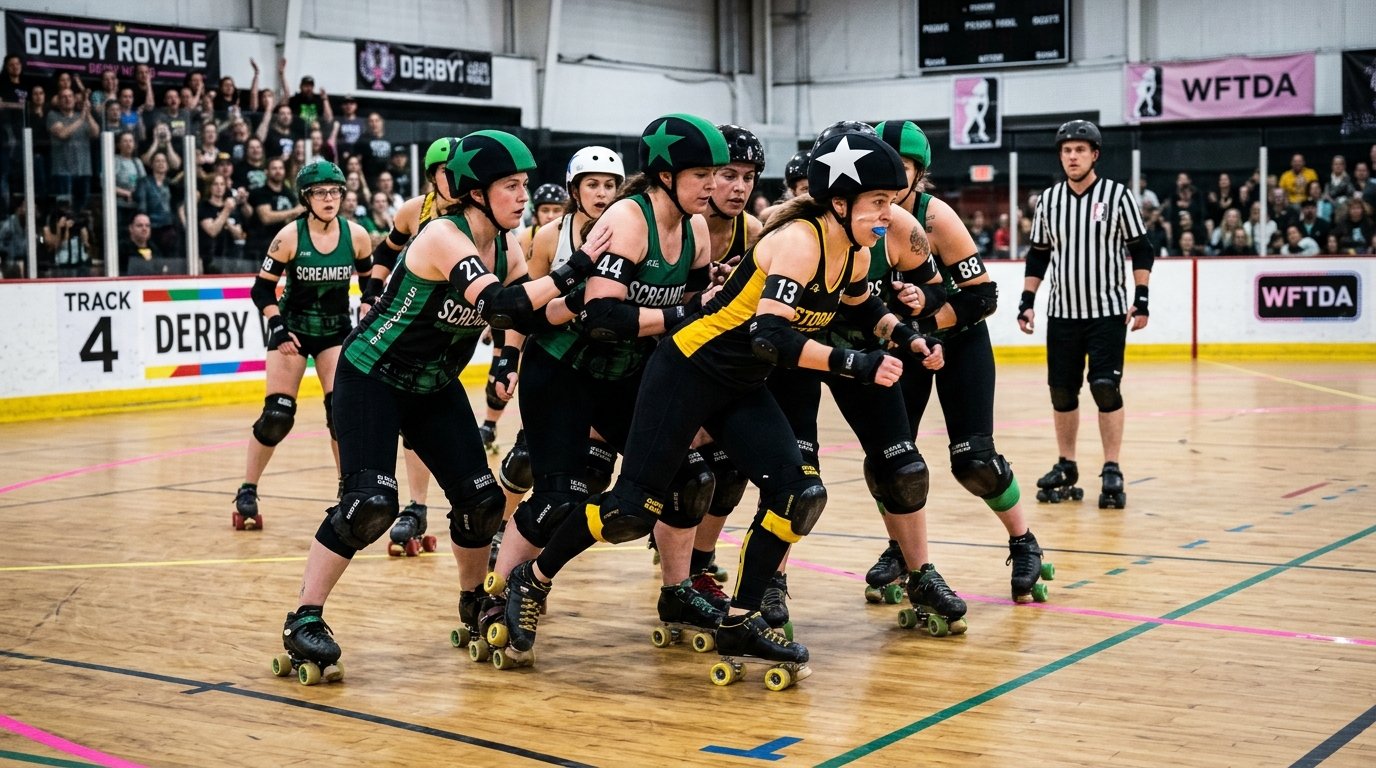
How Roller Derby Works: The Core Rules
Governed globally by World Skate and the Women's Flat Track Derby Association (WFTDA), games (bouts) consist of two 30-minute halves broken into Jams of up to two minutes:
- Team Lineup (5 Skaters on Track):
- 1 Jammer (Star on Helmet): The point scorer. Starts behind the pack and scores 1 point for every opposing blocker they legally lap.
- 4 Blockers: Form the pack. One blocker may be designated as the Pivot (stripe on helmet), who coordinates defensive formations and can accept the star helmet cover to become the Jammer mid-jam.
- Two-Way Gameplay: While your blockers work together to form a wall and stop the opposing Jammer, they must simultaneously hit and screen opposing blockers to help their own Jammer break through!
- Legal Contact Zones: Contact may only be initiated using the shoulders, torso, hips, and upper thighs. Elbowing, tripping with feet, headbutting, and hitting from behind result in immediate penalties in the penalty box.
Youth Junior Roller Derby: A Step-by-Step Safety Ladder
To ensure young skaters develop strength and positional mastery without risk of premature injury, Junior Roller Derby utilizes a three-tiered progression framework:
| Level | Age Group | Contact & Tactical Rules |
|---|---|---|
| Level 1 (Positional) | Ages 7–10 | Zero body contact. Skaters learn pack skating, positional blocking (placing the body in the Jammer's path without hitting), and plow stops. |
| Level 2 (Moderate Contact) | Ages 11–13 | Controlled leaning and pushing contact with hips and shoulders. High-impact checks and hits remain restricted while pack communication solidifies. |
| Level 3 (Full Contact) | Ages 14–17 | Full WFTDA contact rules. Athletes execute legal hip checks, shoulder hits, brace pack walls, and competitive tournament jamming. |
Career & Professional Opportunities in Roller Derby
1. International League Participation & Touring
Roller derby is played in over 50 countries across Europe, North America, Australia, and Latin America. Elite competitors represent their national federations at the World Skate Games and the Roller Derby World Cup.
2. Certified Officiating & Game Management
Every roller derby bout requires up to 7 skating referees and 12 Non-Skating Officials (NSOs) to track points, penalties, jam clocks, and lineup sheets. Certified officials travel internationally to adjudicate tournaments.
3. Strength & Conditioning Coaching
Due to the intense core, hip, and balance demands of roller derby, experienced skaters frequently build successful careers as functional athletic coaches, team strength trainers, and youth derby league coordinators.
Essential Player Gear Checklist
- Skates: Low-cut leather or microfiber derby boots on responsive aluminum plates with large, adjustable toe-stops.
- Wheels: Wide quad derby wheels (typically 59mm–62mm in diameter, 38mm wide) with hardness between 88A and 95A matched to indoor polished concrete or wood.
- Protective Armor (Mandatory): Multi-impact certified skate helmet, heavy-duty knee pads with foam gaskets, elbow pads, rigid wrist guards, and a custom dental mouthguard.
Compare all 10 roller sports in our Complete Guide to Skating Disciplines in India.