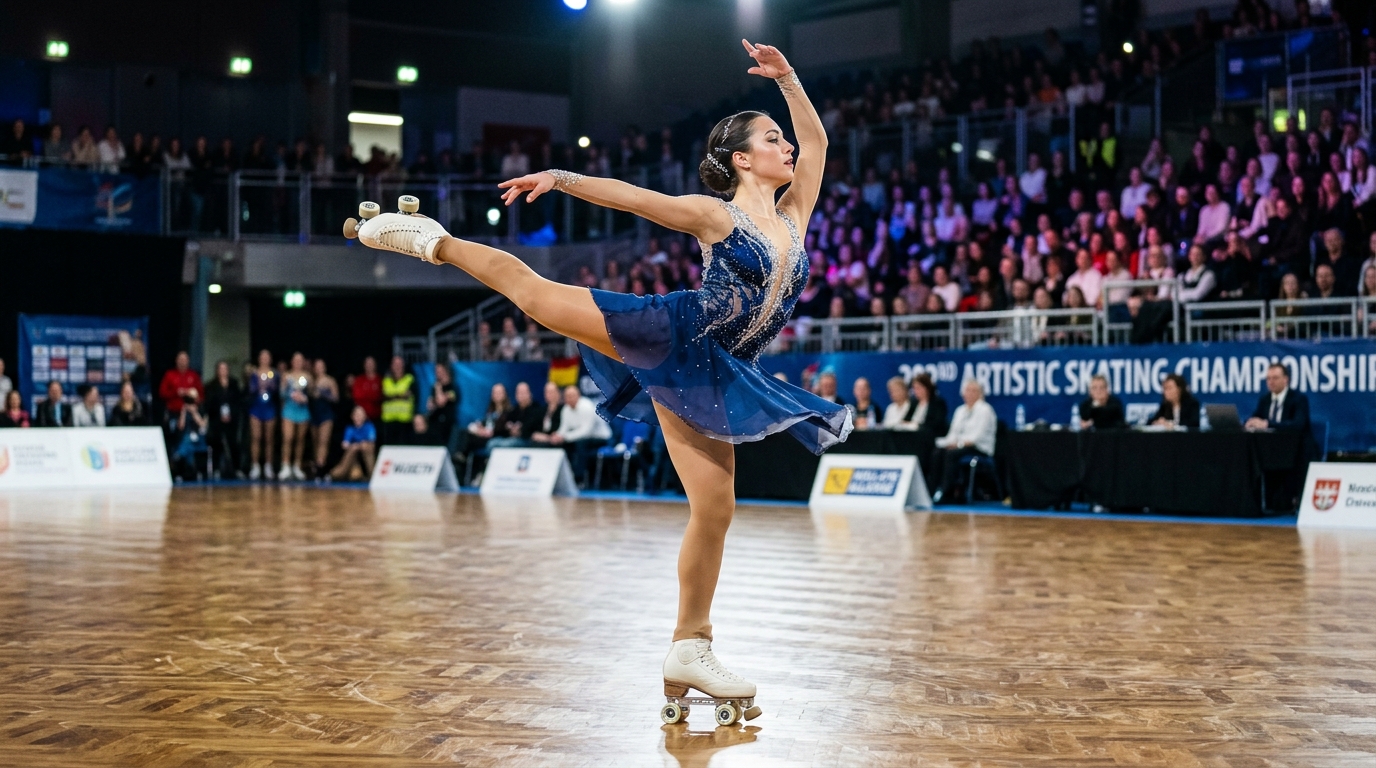
Artistic Roller Skating is the breathtaking union of athletic power, acrobatic gymnastics, and musical artistry on wheels. Recognized worldwide as the roller counterpart of Olympic figure skating, artistic skaters perform soaring jumps, high-speed spins, intricate step sequences, and emotive choreography scored under the cutting-edge RollArt judging system.
The Disciplines of Artistic Skating
Artistic skating is divided into several competitive disciplines under World Skate and RSFI rules:
Freeskating (Solo)
Athletes perform an individual Short Program and Long Program featuring rotational jumps (Axel, Salchow, Toe Loop, Loop, Flip, Lutz), spins (Upright, Sit, Camel, Inverted, Heel spins), and complex footwork sequences choreographed to music.
Solo Dance & Couples Dance
Focuses on pure rhythm, edge accuracy, posture, and interpretation of ballroom and contemporary musical styles (Tango, Waltz, Foxtrot, Cha-Cha, Hip-Hop). Jumps are absent; scoring highlights edge depth, musicality, and intricate turns (Brackets, Counters, Rockers).
Pairs Skating
A male and female partner perform synchronized side-by-side jumps, overhead lifts, death spirals, and throw jumps demonstrating sublime trust, physical strength, and timing.
Precision & Show Groups
Teams of 12 to 24 skaters skate in intricate unison formations (pinwheels, blocks, lines, intersections) or theatrical show routines featuring elaborate costumes, props, and storytelling.
The RollArt Judging System
World Skate transformed artistic roller skating with the launch of the **RollArt scoring system**, which operates on objective, transparent metrics modeled after ISU figure skating:
- Technical Element Score (TES): Each executed element (jump, spin, step sequence, lift) has a pre-determined Base Value (BV). A technical panel evaluates whether rotations and edges were fully achieved, while judges assign a Grade of Execution (GOE) from -3 to +3.
- Program Component Score (PCS): Evaluates the artistry across four distinct criteria:
- Skating Skills (edge control, speed, flow, ice/roller lean)
- Transitions (footwork linking elements)
- Performance & Execution (posture, musical connection, projection)
- Choreography & Composition (structure, floor coverage, originality)
Youth Athlete Progression Pathway
| Tier / Category | Age Range | Technical Benchmarks |
|---|---|---|
| Tots & Minis | Ages 5–8 | Single rotation jumps (Waltz jump, Half-flip, Salchow), basic two-foot spins, upright one-foot spins, forward/backward cross-rolls. |
| Espoir & Cadet | Ages 9–13 | Single Axel, double Salchow, double Toe Loop, sit spins, camel spins, and basic RollArt footwork sequences. |
| Youth & Junior | Ages 14–18 | Double Axel, triple jumps (triple Salchow, triple Toe Loop, triple Flip), combination spins, and high-complexity step sequences. |
| Senior / Elite | Ages 19+ | Triple Axel attempts, triple-triple jump combinations, flying camel spins, high-difficulty lifts in Pairs, Senior World Championship routines. |
Career & Professional Opportunities
1. University Admissions & Sports Quota in India
Artistic skating is recognized by the Ministry of Youth Affairs and Sports (MYAS). State and National artistic medalists receive top points in sports quota entrance trials for:
- Delhi University (DU): ECA (Extra-Curricular Activities) and Sports Quota seats in top colleges.
- State Universities: Reserved athletic admissions in engineering, arts, and physical education universities in Maharashtra, Gujarat, Tamil Nadu, and Punjab.
2. Theatrical Shows & International Performance Contracts
Artistic roller skaters possess extraordinary edge mastery, posture, and performance experience, making them prime candidates for lucrative entertainment careers:
- International Ice & Roller Shows: Shows such as *Holiday on Ice*, *Disney on Ice*, and international circus productions (e.g. *Cirque du Soleil*) regularly hire elite artistic roller skaters, offering global touring salaries, travel, and international visas.
- Film & Commercial Choreography: The Indian film and advertising industry frequently engages competitive artistic skaters for movie stunts, music videos, and cinematic sequences.
3. Elite Coaching & Academy Direction
Because artistic skating requires rare technical expertise in edge dynamics, jump physics, and RollArt rule interpretation, certified coaches command premium hourly fees for private lessons, choreography, and technical specialist clinics.
4. RollArt Technical Specialist & Judging
World Skate and RSFI conduct rigorous certification seminars. Certified RollArt Technical Specialists, Data Operators, and Judges officiate at National Championships, Asian Championships, and the World Skate Games.
Equipment: Quad Figure Skates vs. Inline Figure Skates
- Boots: High-top stiff leather boots (brands such as Edea, Risport, Riedell) offering dense ankle reinforcement for jump landings.
- Quad Plates: Precision aluminum or composite plates (Roll-Line, Atlas) with responsive rubber cushions and adjustable metric toe stops.
- Wheels: High-grip polyurethane wheels rated by hardness (49D to 60D or 92A to 101A) matched to parquet wood or coated concrete rink surfaces.
- Inline Figure Skates: Specialized curved 3-wheel rockered frames with a large front rubber toe-stop, closely mimicking the feeling and edge mechanics of an ice figure skating blade.
Explore all roller sport pathways in our Complete Guide to Skating Disciplines in India.